
DDN
Nearly half of people who are affected by ketamine use disorder are not seeking any support or treatment, according to a new study led by the University of Exeter and University College London (UCL)
news, new scholarship & more from around the world
Nearly half of people who are affected by ketamine use disorder are not seeking any support or treatment, according to a new study led by the University of Exeter and University College London (UCL)

Michaela Raj, manager of the Emotional Wellbeing Team at Wakefield Council, reflects on winning the Children and Young People’s Champion category at the CYP Now Awards 2024.

If experience is a song, mood is the bassline. As your thoughts and sensations flow by, it’s your mood that provides the emotional undercurrent. It predisposes you to respond in certain ways to a dynamic and changing world. If you’re in a positive mood, a beautiful sunset pulses with awe and appreciation; a first sip of coffee hums with comfort amid the morning’s busy schedule. Conversely, if you’re in a bad mood, forgetting your wallet while shopping immediately introduces sharp notes of gloom and irritation.


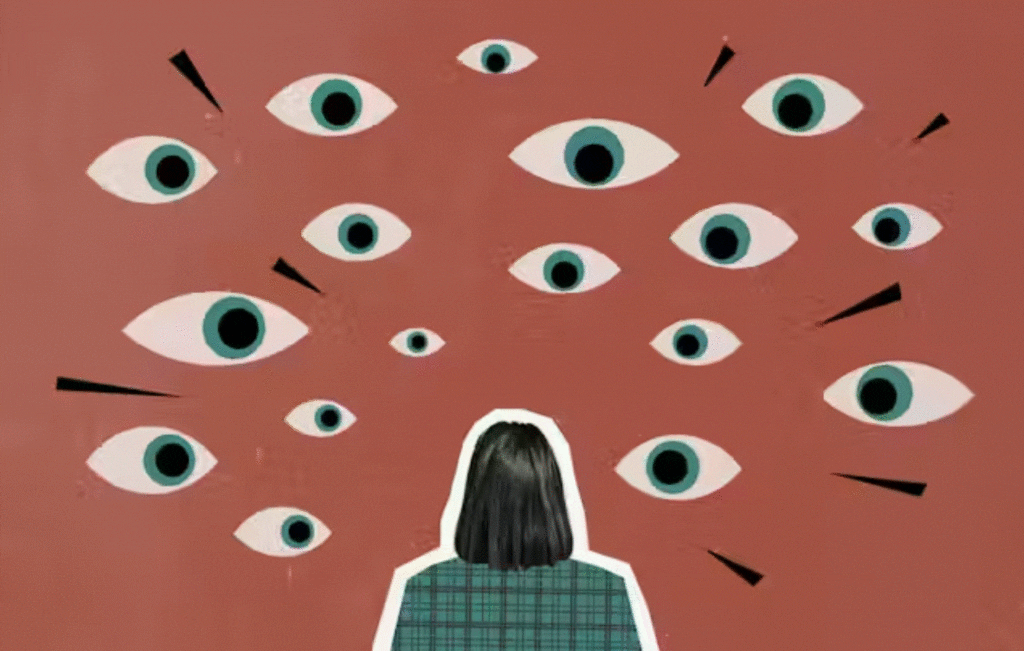
Peer review as we know it arose in the mid 20th century as the demand for specialised research grew following the end of the second world war. Contrast this with the 18th and 19th centuries, when peer review was undertaken mainly by editors of learned societies and university publishing presses. Today, peer review is done largely by external peer reviewers who have been asked by a journal’s editor to conduct a review of a manuscript focusing on the quality and value of the research.
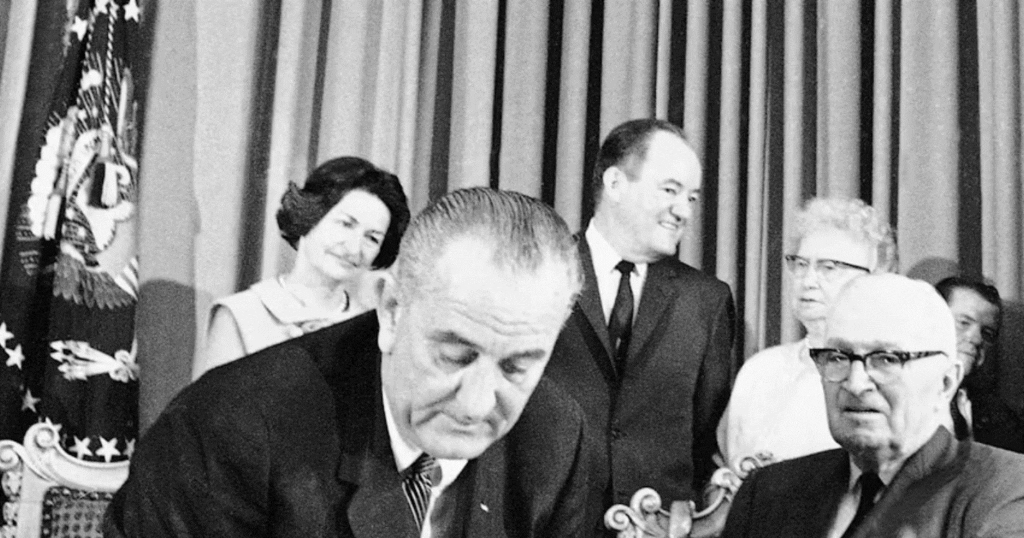
President Lyndon B. Johnson, left, next to former President Harry S. Truman, signs into law the measure creating Medicare and Medicaid in 1965.

Members of the Crisis Response Team, which has police officers and social workers, who have expertise in mental health and de-escalation techniques, deployed together to respond to mental health and substance abuse issues within the city.