• Skip to primary navigation
  • Skip to main content
  • Skip to primary sidebar

information for practice

news, new scholarship & more from around the world


advanced search
  • gary.holden@nyu.edu
  • @ Info4Practice
  • Archive
  • About
  • Help
  • Browse Key Journals
  • RSS Feeds

History (4,904 posts)

Backlash against American psychology: An indigenous reconstruction of the history of German critical psychology.

hop-150

After suggesting that all psychologies contain indigenous qualities and discussing differences and commonalities between German and North American historiographies of psychology, an indigenous reconstruction of German critical psychology is applied. It is argued that German critical psychology can be understood as a backlash against American psychology, as a response to the Americanization of German psychology after WWII, on the background of the history of German psychology, the academic impact of the Cold War, and the trajectory of personal biographies and institutions.

Posted in: History on 02/22/2013 | Link to this post on IFP |
Share

Mapping Civilization: The Cultural Geography of Suicide Statistics in Russia

j of social history

This article charts the history of suicide statistics in Russia, exploring how multilayered associations between suicide and civilization were mapped upon perceived geographical, historical, and social fissures, both within Russia and between Russia and an abstract “west.”

Posted in: History on 02/20/2013 | Link to this post on IFP |
Share

Family wages: The roles of wives and mothers in U.S. working-class survival strategies, 1880–1930

labor history

The common image of a female wage earner in the U.S. in the decades around the turn of the 20th century is that of a young, single woman: the daughter of her family. However, the wives and mothers of these families also made important economic contributions to their families’ economies. This paper argues that we need to rethink our evaluation of the economic roles played by ever-married women in working-class families.

Posted in: History on 02/19/2013 | Link to this post on IFP |
Share

Making the cut: The production of ‘self-harm’ in post-1945 Anglo-Saxon psychiatry

hx of the human sciences

‘Deliberate self-harm’, ‘self-mutilation’ and ‘self-injury’ are just some of the terms used to describe one of the most prominent issues in British mental health policy in recent years.

Posted in: History on 02/18/2013 | Link to this post on IFP |
Share

Sociology’s “One Law”: Moral Statistics, Modernity, Religion, and German Nationalism in the Suicide Studies of Adolf Wagner and Alexander von Oettingen

j of social history 2

From the onset, moral statistics were influenced by religious discourse. During the nineteenth century, Adolf Wagner discovered the “One Law” of sociology: Protestants always kill themselves more often than Catholics.

Posted in: History on 02/17/2013 | Link to this post on IFP |
Share

Memoirs of Extraordinary Popular Delusions and the Madness of Crowds

memoirsof extaordinaryCharles MacKay (1852)

Posted in: History on 02/16/2013 | Link to this post on IFP |
Share

Magic Bullets for Mental Disorders: The Emergence of the Concept of an “Antipsychotic” Drug

j of the hx of the neurosciences

When “antipsychotic” drugs were introduced into psychiatry in the 1950s, they were thought to work by inducing a state of neurological suppression, which reduced behavioral disturbance as well as psychotic symptoms. This view was reflected in the name “neuroleptic.”

Posted in: History on 02/15/2013 | Link to this post on IFP |
Share

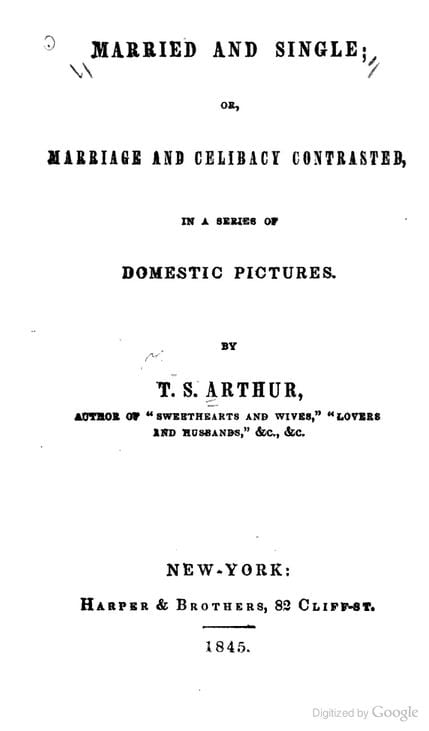
Married and single; or, Marriage and celibacy contrasted: in a series of domestic pictures

marriedandTS Arthur (1845)

Posted in: History on 02/14/2013 | Link to this post on IFP |
Share

The Niagara Frontier Defense League’s patriotic war on labor: the case of Curtiss Aeroplane, 1917–1918

labor history

Initially formed by Buffalo businessmen to monitor the region’s sizeable German population, by Fall 1917, the NFDL turned its attention to tackling the region’s labor problems, developing an array of covert mechanisms designed to stop unionization and regain control over Buffalo’s wartime labor market.

Posted in: History on 02/13/2013 | Link to this post on IFP |
Share

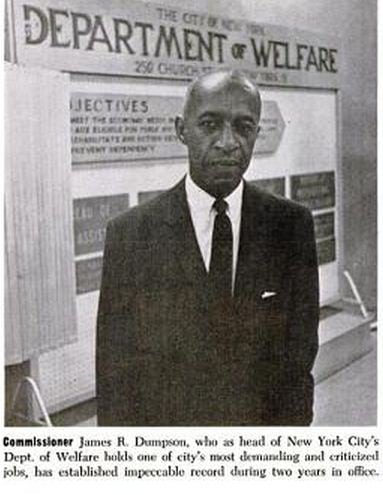
New York City Welfare Boss

Capture

Posted in: History on 02/13/2013 | Link to this post on IFP |
Share

‘A Prostitution of the Profession’? Forcible Feeding, Prison Doctors, Suffrage and the British State, 1909-1914

shm banner

Historians have castigated the British medical profession for endorsing forcible feeding during the suffragette hunger strike campaigns of 1909 to 1914. This article reconsiders the importance of medical opposition to forcible feeding by closely analysing its agendas and, importantly, by positing that the medico-ethical debates sparked in that period set the stage for ethical discourses that have recurrently resurfaced ever since.

Posted in: History on 02/11/2013 | Link to this post on IFP |
Share

The Chlorpromazine Enigma

j of the hx of the neurosciences

Two revolutionary drugs were introduced into psychiatry in the early 1950s for the treatment of agitated mental patients — reserpine and chlorpromazine. These drugs initiated the modern era of drug treatment for schizophrenia and other psychoses. Early research revealed that, although the pharmacological profiles of the two drugs overlapped considerably, they had different mechanisms of action.

Posted in: History on 02/10/2013 | Link to this post on IFP |
Share

Exposing Humanism: Prudence, Ingenium, and the Politics of the Posthuman

j of hx sociology

This article examines posthumanism and its relationship to humanism. First, it is argued that the term “posthumanism” relies upon an incomplete conception of humanism, and in a way that forecloses the possibility of looking to the humanist tradition for support.

Posted in: History on 02/09/2013 | Link to this post on IFP |
Share

Main building of Delhi School of Social Work, 1985

2694Smith College Sophia Smith Collection

Posted in: History on 02/09/2013 | Link to this post on IFP |
Share

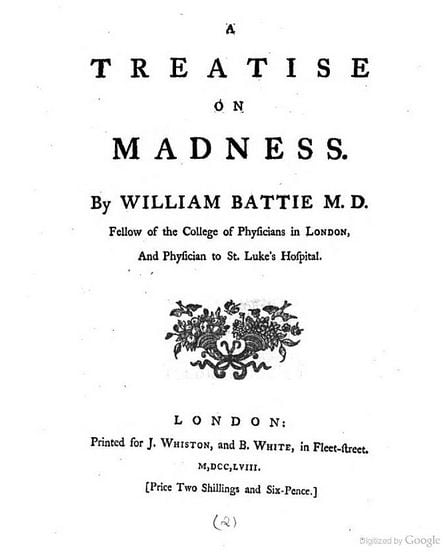
A treatise on madness

treatiseonmadnessWilliam Battie (1758)

Posted in: History on 02/08/2013 | Link to this post on IFP |
Share

Herbert Hill and the Federal Bureau of Investigation

labor history

This article points to previously undetected evidence demonstrating that Herbert Hill, labor director of the National Association for the Advancement of Colored People (NAACP) from the 1950s to the 1970s, informed for the Federal Bureau of Investigation (FBI) on his former political associates in the Socialist Workers Party (SWP).

Posted in: History on 02/07/2013 | Link to this post on IFP |
Share

Mysterious “Monsieur Leborgne”: The Mystery of the Famous Patient in the History of Neuropsychology is Explained

j of the hx of the neurosciences

As of spring 2011, 150 years have passed since the death of one of the most famous neurological patients of the nineteenth century. A Frenchman, “Monsieur Leborgne” also known by the nickname “Tan,” was hospitalized due to an almost complete loss of speech.

Posted in: History on 02/06/2013 | Link to this post on IFP |
Share

Life Support in High Age: Northern Norway 1865-1900

j family hx

This article explores how very old people in Northern Norway supported life before economic modernization, from nineteenth-century census registrations and ethnographic sources. Very few lived alone.

Posted in: History on 02/05/2013 | Link to this post on IFP |
Share

Chilean Protest Murals

chile_muralsChilean Protest Murals Photograph Collection, Widener Library.

Mural depicting a man and woman in a prison cell. Avenida Libertador General Bernardo O’Higgins, Santiago, Chile, ca. 1989. Andrés Romero Spethman, photographer.

Posted in: History on 02/04/2013 | Link to this post on IFP |
Share

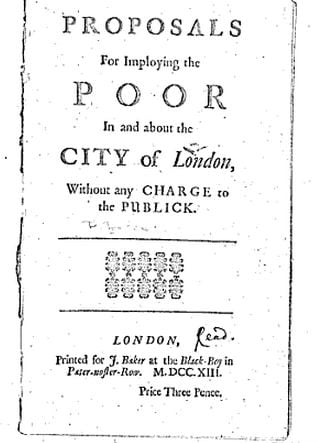
Proposals for Imploying the Poor in and about the City of London (1886)

imploying the poorGoogle | Daniel Defoe

Posted in: History on 02/03/2013 | Link to this post on IFP |
Share

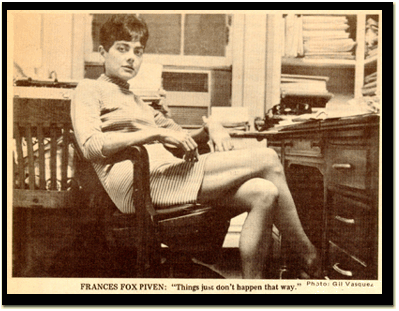
Dr. Frances Fox Piven

piven1mainSmith College Sophia Smith Collection | Boston Sunday Globe/G Vasquez

Social theorist, welfare rights activist, and political science professor Frances Fox Piven was born in 1932 in Calgary, Alberta. Raised in New York, she was naturalized in 1953, the same year she received a BA in city planning from the University of Chicago. After receiving an MA (1956) and a Ph.D. (1962) from that institution, she moved to New York where she worked as a city planner and then as a research associate for one of the country’s first antipoverty agencies, Mobilization for Youth (MFY) on New York’s Lower East Side. In 1965 Piven and her MFY colleague Richard Cloward began a career of formulating the theoretical underpinnings of anti-poverty and welfare rights movements with the publication of a paper entitled “Mobilizing the Poor: How It Can Be Done”

Personal note: I found Dr. Piven to be the most compelling presence I have ever encountered in a classroom.

Posted in: History on 02/02/2013 | Link to this post on IFP |
Share

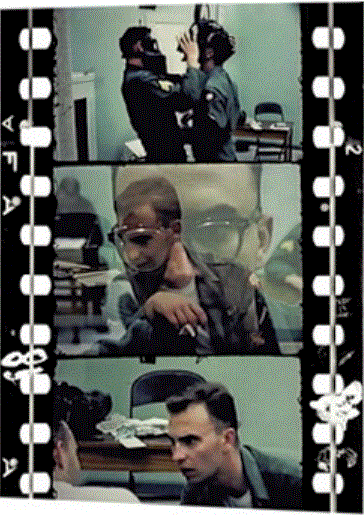
“Operation Delirium”

Thumbnail
Thumbnail

delirium - nyNew Yorker

At an Army research facility, a soldier given a powerful mind-altering drug said, “I feel like my life is not worth a nickel here.”

Posted in: History on 02/01/2013 | Link to this post on IFP |
Share

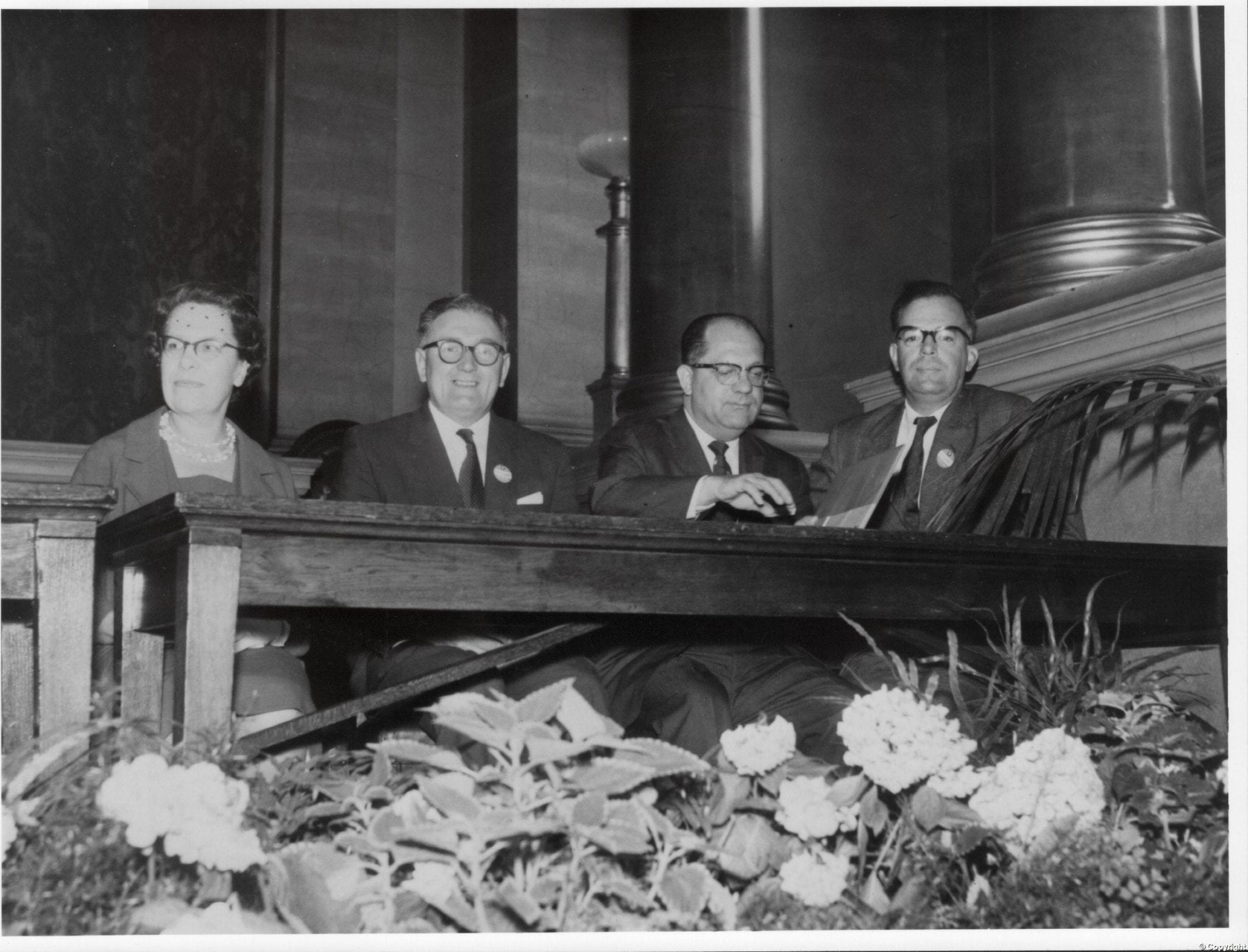
Opening ceremony of the London Conference on the Scientific Study of Mental Deficiency, Tavistock Square London July 1960.

london1951-bpsarchives.bps.org.uk | University of Hull photographic services, Brynmor Jones Library

Grace Rawlings: British Psychological Society
D Thomas: Royal Medico Psychological Association (RMPA)
Harvey Stevens: Chair, American Committee American Assoc.on Mental Deficiency
Alan Clarke: Joint Secretary

Posted in: History on 01/31/2013 | Link to this post on IFP |
Share

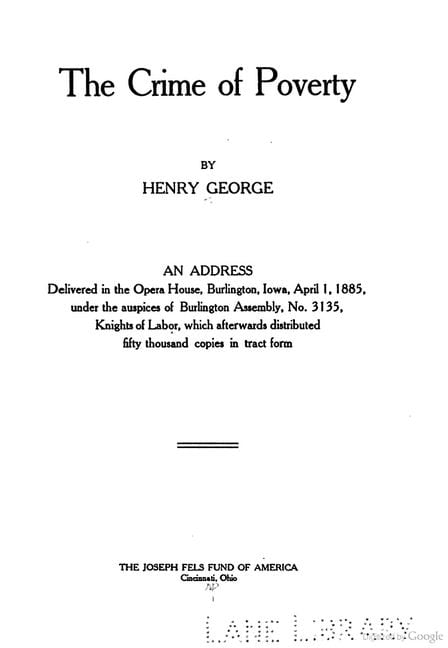
The Crime of Poverty (1885)

crimeof pvertyGoogle | Henry George

Posted in: History on 01/30/2013 | Link to this post on IFP |
Share

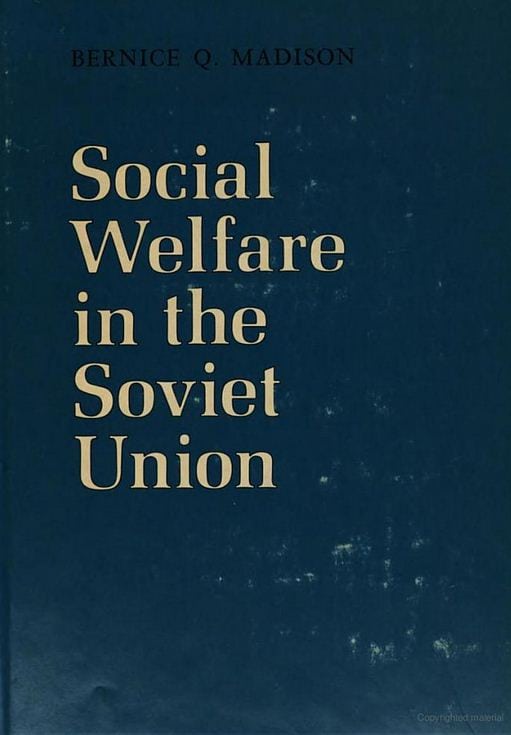
Social Welfare in the Soviet Union (1968)

swinSUGoogle | Stanford University Press

Posted in: History on 01/29/2013 | Link to this post on IFP |
Share

Scientific History and Experimental History

journal of interdisciplinary hx

The promise of scientific history and scientifically informed history is more modest today than it was in the nineteenth century, when a number of intellectuals hoped to transform history into a scientific mode of inquiry that would unite the humanities, social sciences, and natural sciences, and reveal profound truths about human nature and destiny.

Posted in: History on 01/28/2013 | Link to this post on IFP |
Share

What really happened to the 1960s: how mass media culture failed American democracy

the sixties

Posted in: History on 01/27/2013 | Link to this post on IFP |
Share

On the Roman father’s right to kill his adulterous daughter

hx of the family

The second chapter of Augustus’ lex Iulia de adulteriis coercendis entitles the Roman father – under specific, narrowly defined circumstances – to kill his adulterous daughter and her lover. This paper focuses on three aspects.

Posted in: History on 01/26/2013 | Link to this post on IFP |
Share

Crime and Punishment in Ottoman Times: Corruption and Fines

journal of interdisciplinary hx
<br.Ruling for more than six centuries over lands that spanned three continents, the Ottomans developed a system of law enforcement that initially relied on fines collected by local agents. In the sixteenth century, much of the revenue from these fines went to the local officials in charge of identifying suspects and punishing criminals.

Posted in: History on 01/25/2013 | Link to this post on IFP |
Share

Patient care by VA psychologists in the 1950s and 1960s

psychological services

In 1946, the Veterans Administration, now the Department of Veterans Affairs (VA), underwent extensive organizational and professional changes to accommodate the health care needs of veterans returning from World War Two.

Posted in: History on 01/24/2013 | Link to this post on IFP |
Share

Are Aging Baby Boomers Squeezing Young Workers Out of Jobs?

As life expectancy increases and the retirement in-come system contracts, households face an enormous challenge in ensuring a secure retirement. Working longer is often hailed as the best way to increase re-tirement incomes. But some suggest that more work by older persons reduces the job opportunities for younger persons.

Posted in: History on 01/24/2013 | Link to this post on IFP |
Share

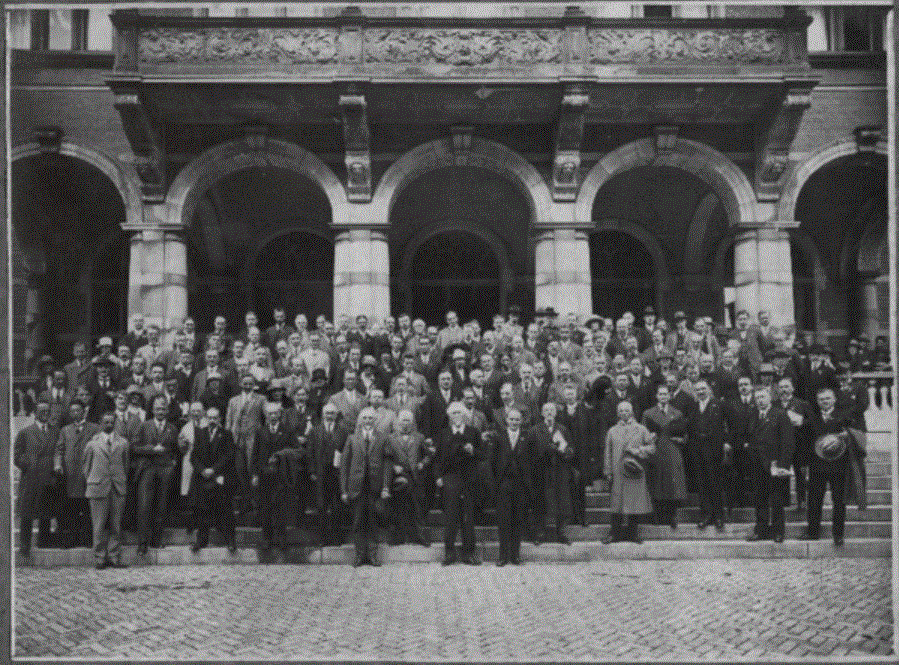
Psychologists attending the eighth International Congress of Psychology (ICP)

bps-nl-1916archives.bps.org.uk | N.V.Int.Persefoto Bureau, Amsterdam P.H.Kade

University of Groningen, Netherlands 1926

Posted in: History on 01/23/2013 | Link to this post on IFP |
Share

Normalizing the Supernormal: The Formation of the Gesellschaft Fr Psychologische Forschung (Society for Psychological Research), c. 1886–1890

j of hx of behav sciences 2

This paper traces the formation of the German “Gesellschaft für psychologische Forschung” (“Society for Psychological Research”), whose constitutive branches in Munich and Berlin were originally founded as inlets for alternatives to Wundtian experimental psychology from France and England, that is, experimental researches into hypnotism and alleged supernormal phenomena.

Posted in: History on 01/22/2013 | Link to this post on IFP |
Share

British Educational Psychology: The First Hundred Years

HoPC-monograph-coverHistory of Psychology Centre

In 1913 the first applied psychologist took up his post with the London County Council. His job was to assess children for special educational programmes and develop tools to identify children who may need alternative kinds of education. With this post, the profession of educational psychology was born. The numbers of educational psychologists have steadily grown over the subsequent hundred years and the practices, roles and functions that they adopt have similarly developed.

Posted in: History on 01/21/2013 | Link to this post on IFP |
Share

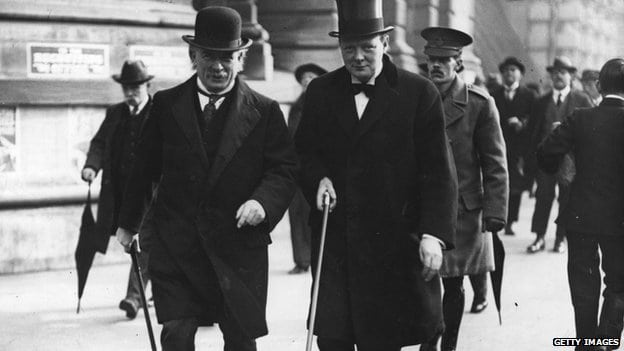
Skivers versus strivers: The roots of the welfare state

_65339717_03_gettyimages_3289110BBC | Getty Images

Lloyd George and Winston Churchill, 1915

Posted in: History on 01/20/2013 | Link to this post on IFP |
Share

Rethinking the American anti-war movement

the sixties

Posted in: History on 01/19/2013 | Link to this post on IFP |
Share

The real things: photographing scenes of the 1960s

the sixties

Posted in: History on 01/18/2013 | Link to this post on IFP |
Share

Ontario Government Funding and Supervision of Infants’ Homes 1875-1893

Prior to 1893, the Ontario government did not accept direct responsibility for the care of neglected and dependent infants. However, charitable infants’ homes received government grants for the infants and for their nursing mothers, and from 1874 were inspected annually or twice annually.

Posted in: History on 01/17/2013 | Link to this post on IFP |
Share

Plans to end the Great Depression from the American public

labor history

Thousands of letters proposing economic recovery plans were written by workers and by the public in general to the Roosevelt administration. A survey of the recovery plan letters indicates that almost all of the letters make sense from an economic point of view and that a large proportion made suggestions that had the possibility of having a positive effect on economic recovery.

Posted in: History on 01/16/2013 | Link to this post on IFP |
Share

Talkin’ Bout My Generation’: Political Orientations and Activities of a Cohort of Canadian University Students in the Mid-Sixties

j of Histroical sociology

While Canadian scholars have documented some of the beliefs and behaviours of student activists in the 1960s, little has been said of the ‘average’ Canadian university student.

Posted in: History on 01/15/2013 | Link to this post on IFP |
Share

Democratizing mental health: Motherhood, therapeutic community and the emergence of the psychiatric family at the Cassel Hospital in post-Second World War Britain

Shortly following the Second World War, and under the medical direction of ex-army psychiatrist T. F. Main, the Cassel Hospital for Functional Nervous Disorders emerged as a pioneering democratic ‘therapeutic community’ in the treatment of mental illness. This definitive movement away from conventional ‘custodial’ assumptions about the function of the psychiatric hospital initially grew out of a commitment to sharing therapeutic responsibility between patients and staff and to preserving patients’ pre-admission responsibilities and social identities.

Posted in: History on 01/14/2013 | Link to this post on IFP |
Share

Dedicated followers of fashion: peacock fashion and the roots of the new American man, 1960–70

This article explores the peacock look in men’s fashion in the second half of the 1960s and the ways the style helped to reinvent the identities of white, middle-class, middle-age men.

Posted in: History on 01/13/2013 | Link to this post on IFP |
Share

Shutting down ‘Big Brown’: Reassessing the 1997 UPS strike and the fate of American labor

In the summer of 1997, organized labor won a major strike against United Parcel Service. Staying out for just over two weeks, more than 185,000 members of the International Brotherhood of Teamsters (IBT) crippled UPS’s operations, securing pay increases and more full-time positions as a result. At the time, observers widely predicted that the strike would lead to a revival of organized labor’s fortunes, especially as it showed that American unions could still win public support.

Posted in: History on 01/12/2013 | Link to this post on IFP |
Share

Still Connected: Family and Friends in America since 1970

Commentators on American culture have always been struck by the thinness of the country’s social fabric. Tocqueville saw the young republic as a nation of strangers. Critics since have almost all feared for—or gloried in—the fragility of the bonds that have held us to one another.

Posted in: History on 01/11/2013 | Link to this post on IFP |
Share

Quilts: Moral Economies and Matrilineages

Posted in: History on 01/10/2013 | Link to this post on IFP |
Share

Glasgow’s ‘sick society’?: James Halliday, psychosocial medicine and medical holism in Britain c.1920–48

Thumbnail
Thumbnail

James Lorimer Halliday (1897–1983) pioneered the development of the concept of psychosocial medicine in Britain in the 1930s and 1940s. He worked in Glasgow, first as a public health doctor, and then as part of the corporatist National Health Insurance scheme.

Posted in: History on 01/09/2013 | Link to this post on IFP |
Share

Children and Agency: Religion as Socialisation in Late Antiquity and the Late Medieval West

The aim of the paper is to present a new approach to the study of pre-modern children and childhood. By exploiting concepts of modern childhood studies, particularly socialisation and agency, we intend to shift the focus from ‘childhood’ and parental attitudes to children’s own experience and action.

Posted in: History on 01/08/2013 | Link to this post on IFP |
Share

Inflation and Marriage in Israel

At the end of the 1970s and the beginning of the 1980s, inflation in Israel exceeded 100 percent. Using the twenty percent samples of the 1972, 1983, 1995, and 2008 Israeli Census, we show that inflation had a substantial negative effect on the decision to marry.

Posted in: History on 01/06/2013 | Link to this post on IFP |
Share

Backing Dr King: the financial transformation of the Southern Christian Leadership Conference in 1963

This article details how the fund-raising efforts of Martin Luther King’s Southern Christian Leadership Conference in the wake of the 1963 Birmingham protests transformed the finances of the SCLC. Having struggled to sustain itself prior to 1963, the SCLC experienced a massive influx of donations.

Posted in: History on 01/05/2013 | Link to this post on IFP |
Share

Secret suffering: the victims of compulsory sterilization during National Socialism

From the second half of the 19th century, eugenics claimed the medical and social need to intervene in human reproduction. During National Socialism, 300,000–400,000 people in Germany were subjected to compulsory sterilization because they had psychological diseases, impairments and social behavioural problems, which were regarded as genetically determined.

Posted in: History on 01/04/2013 | Link to this post on IFP |
Share
  • « Go to Previous Page
  • Page 1
  • Interim pages omitted …
  • Page 91
  • Page 92
  • Page 93
  • Page 94
  • Page 95
  • Interim pages omitted …
  • Page 99
  • Go to Next Page »

Primary Sidebar

Categories

Category RSS Feeds

  • Calls & Consultations
  • Clinical Trials
  • Funding
  • Grey Literature
  • Guidelines Plus
  • History
  • Infographics
  • Journal Article Abstracts
  • Meta-analyses - Systematic Reviews
  • Monographs & Edited Collections
  • News
  • Open Access Journal Articles
  • Podcasts
  • Video

© 1993-2025 Dr. Gary Holden. All rights reserved.

gary.holden@nyu.edu
@Info4Practice