
Hikikomori (引きこもり): Ancient term, modern concept
news, new scholarship & more from around the world

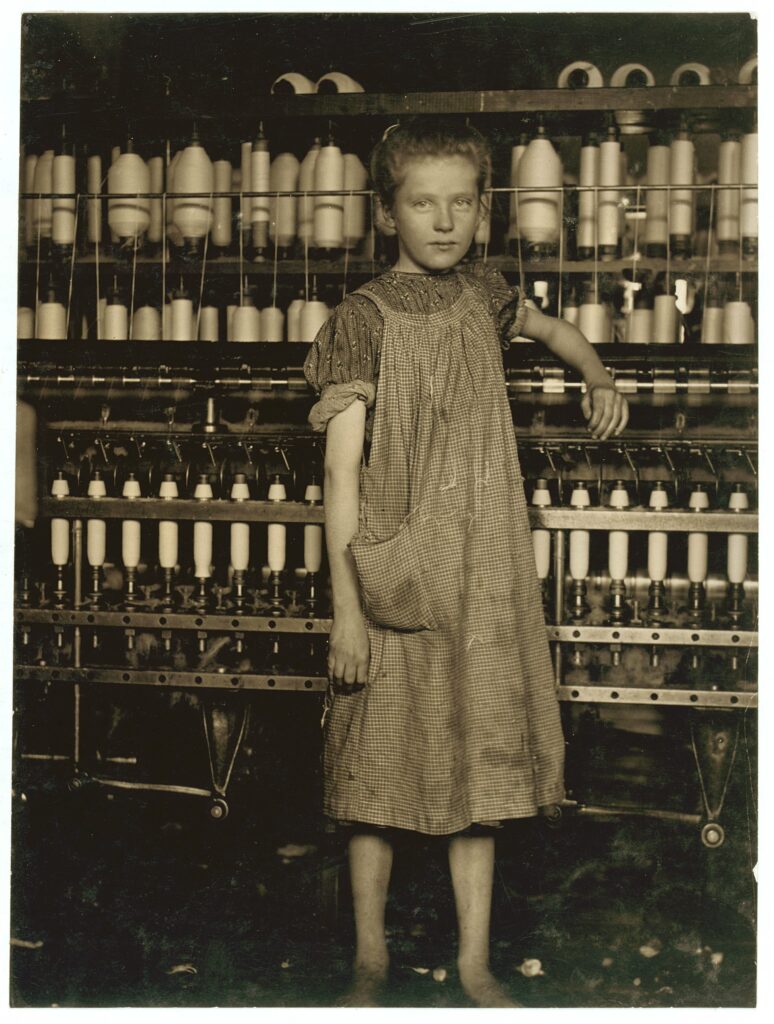
Lewis Hine’s photograph of Addie Card, taken in August 1910, has become an iconic image of child labor. Hine learned that Addie started working at the North Pownal, Vermont, cotton mill when she was 8 and left school at the age of 12 to work there full-time.


History of Psychiatry, Ahead of Print.
James Lucett, a London clerk, claimed possession of a secret remedy for curing chronic insanity. In 1813, he and the Irish surgeon Charles Delahoyde secured royal and aristocratic patronage to implement their ‘process’ and opened a private asylum. They aroused great public interest after apparently remarkable results with hitherto intractable patients from Bethlem and Hoxton. Delahoyde and Lucett attained brief celebrity, but within a year it was evident that the dramatic recoveries were only temporary. Their venture collapsed in disarray and bankruptcy, and the episode was soon largely forgotten. Delahoyde fled to Ireland, but Lucett managed to re-establish himself in practice. This article narrates the origins, operation and failure of the enterprise. A second article will consider Lucett’s subsequent career.
The emergence of the neurosurgical patient as a novel clinical entity in the Netherlands was marked by a lingering conflict between neurologists and neurosurgeons, in which both types of specialists sought to assume the clinical and institutional leadership of neurosurgical patient care. In the 1920s and 1930s, neurologists had facilitated the establishment of the first generation of neurosurgeons in the country, and in the process, had managed to clinically and institutionally subordinate neurosurgery to neurology. As the demand for neurosurgical patient care grew, the neurosurgeons began to challenge this hegemonic relationship. The neurologists, however, were unwilling to give up their control, fearing that they would be bypassed in the diagnosis of patients eligible to neurosurgery. These conflicting aims and interests resulted in an intricate demarcation battle, in which the boundary work between neurologists and neurosurgeons was directly played out at the local workplace and at the meetings of the Study Club for Neuro-Surgery, and indirectly at various other sites of contestation, such as medical journals and academic lecture halls, as both parties sought to rally external stakeholders to their cause. During these negotiations, local, national, and international forces increasingly intertwined to shape the particular organization of Dutch neurosurgery in the middle of the twentieth century. By analyzing this multilayered demarcation process, this article draws attention to the complexity of medical boundary work, and to the way in which, despite pervasive international influences, specialist practice was ultimately negotiated at the local and national levels.

History of Psychiatry, Ahead of Print.
As a deeply hybrid discipline, psychiatry demands research that tackles the concepts constituting it and its objects. This is an essential prerequisite to empirical studies, the validity of which are directly dependent on a clear understanding of the underlying concepts. Empathy and sympathy are concepts used variably and inconsistently in clinical practice and research, with ensuing uncertainties around their role and meaning. Using a historical epistemology approach, this paper compares these concepts by examining the structures, intersections, stabilities and factors that shape them. It shows that neither concept is invariant, and, despite overlap, the concepts are essentially different, underpinned by different assumptions, holding different functions and capturing different phenomena. In turn, such differences require apposite approaches to their empirical study.







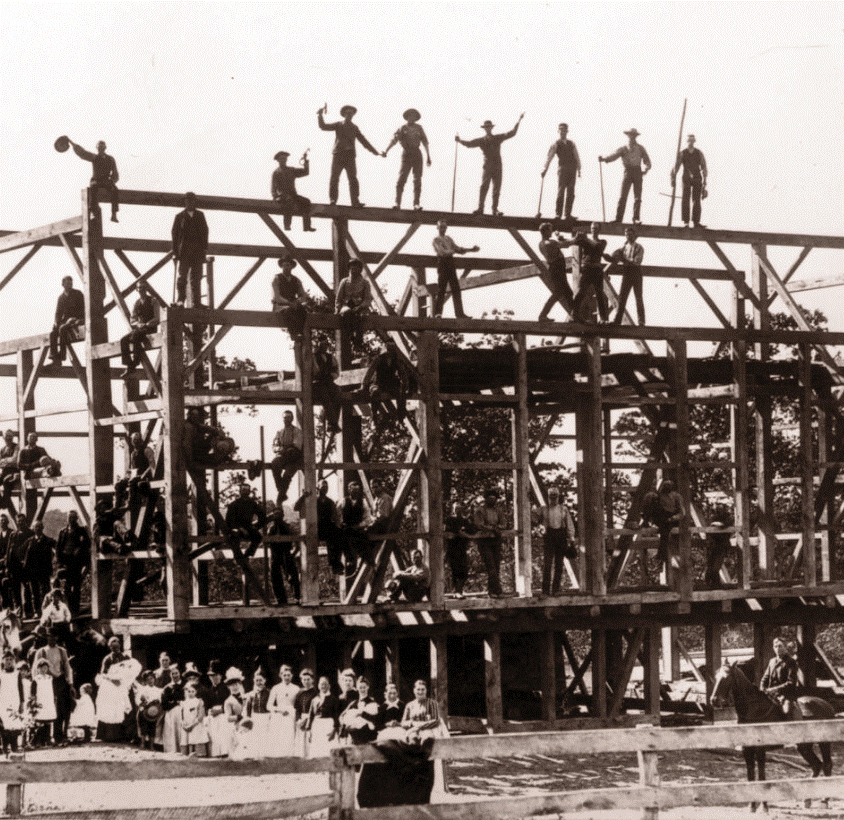

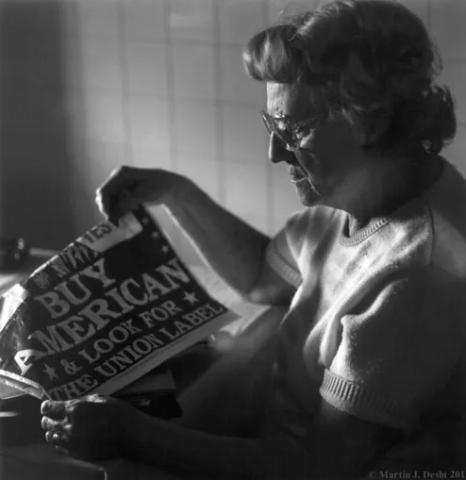
Faces From An American Dream features black-and-white photographs by Mr. Desht, who notes that “for much of the 20th century, Pennsylvania was the most heavily and diversely industrialized state in America. Pittsburgh was famous for thirty miles of steel mills, Philadelphia billed itself the “workshop of the world,” the Pennsylvania Railroad traversed half the country and the state’s anthracite fueled the nation.” By the 1980’s,” Desht continues “both cities were examples of Rust Belt de-industrialization as America’s economy shifted from industrial manufacturing to service and information. Faces From An American Dream depicts how this transition re-defined the American industrial city and what it meant for skilled and unskilled workers in search of the American dream.

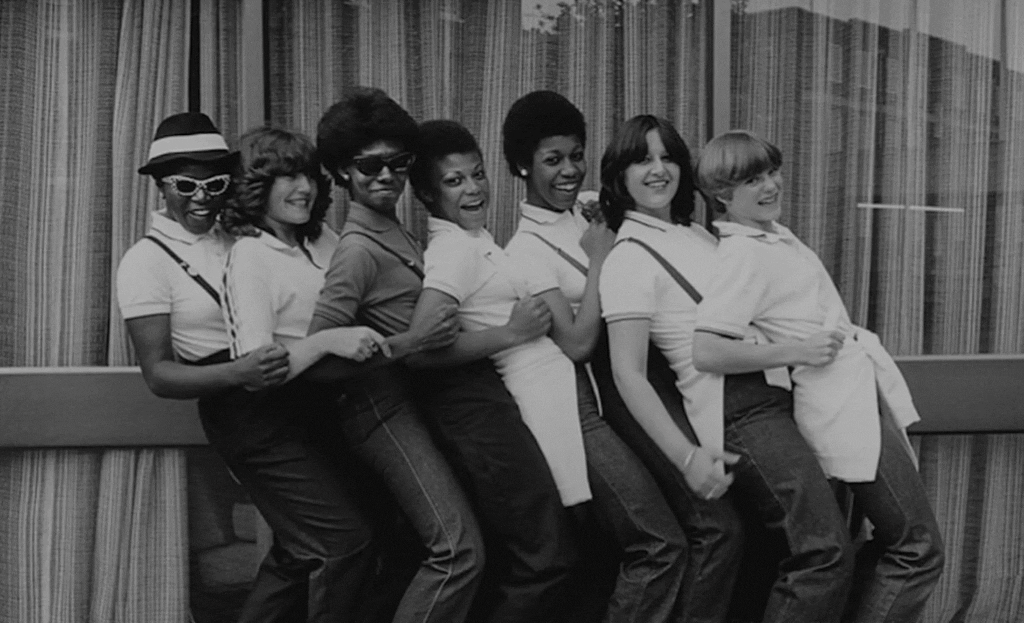
Photographs by Janette Beckman
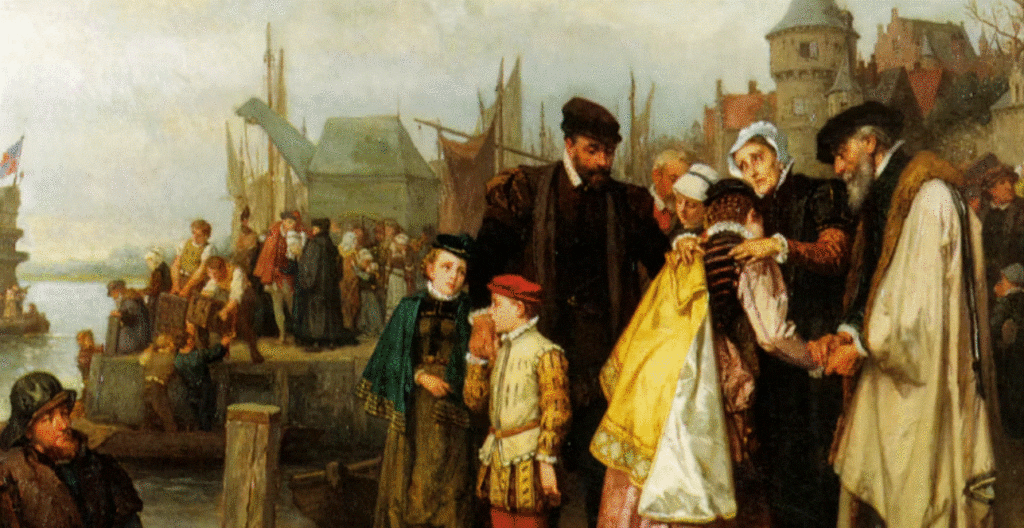
Emigration of the Huguenots (1566) by Jan Antoon Neuhuys

This undated image provided by the Frances Perkins Center, shows land and home belonging to the late Frances Perkins, the nation’s first female Cabinet member under President Franklin D. Roosevelt in Newcastle, Maine. Maine leaders said, Aug. 8, that they’re asking President Biden to elevate the status of the homestead by making it a national monument managed by the National Park Service.
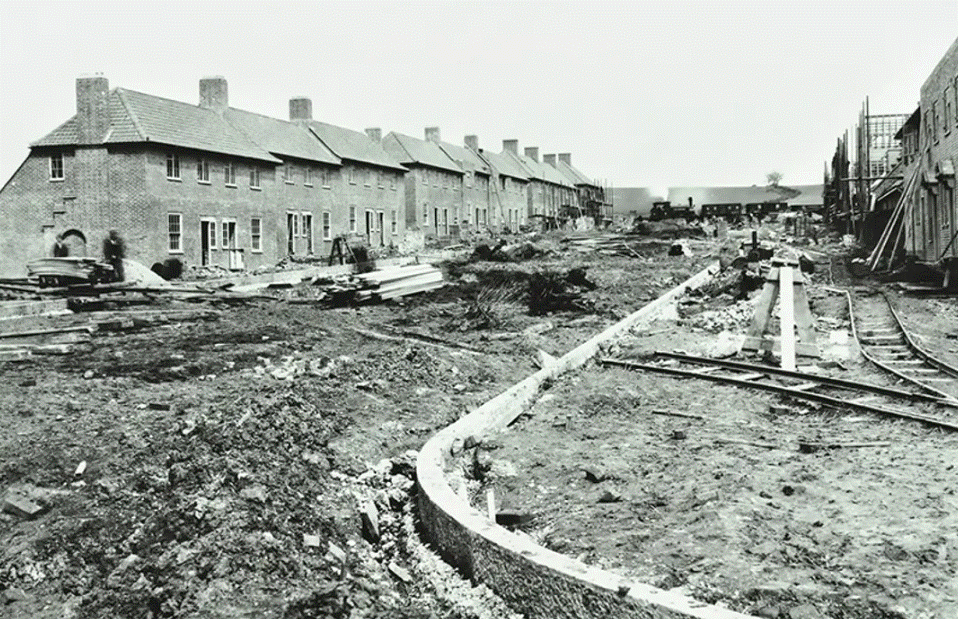
Construction on the Downham Estate in 1925. This was one of eventually 13 ‘cottage estates’ built by the London County Council in the interwar years as part of a huge social and economic transformation of Britain, partly fuelled by the demands of those back from conflict that they not return to the terrible inner-city living conditions they’d left behind. A little more than 100 years ago, the scale of poverty and deprivation in London’s inner-city slums was dramatic.
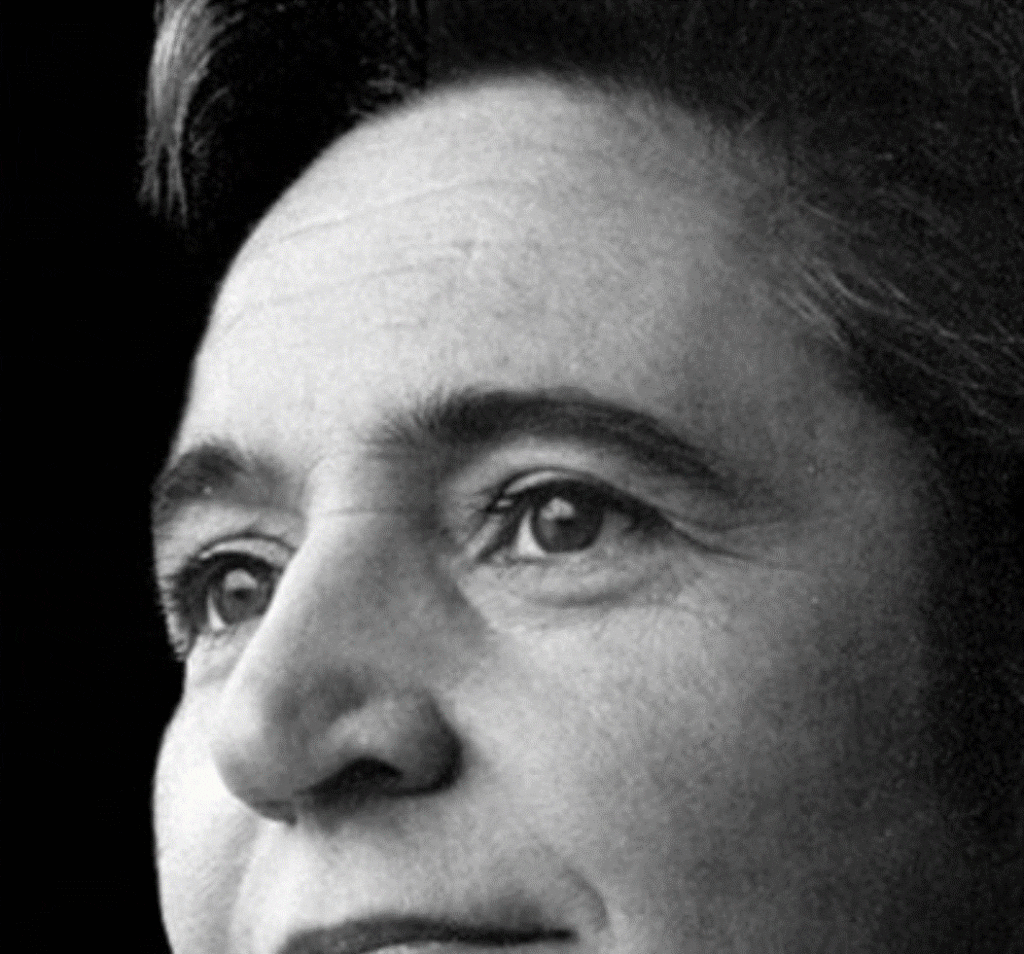
This article is part of a series of profiles of key figures who have shaped social work over the past five decades, to mark Community Care’s 50th anniversary. In 2013, social work lost a generation-defining academic and social worker, with the death of Olive Stevenson. During 60 years in the profession, Stevenson trained hundreds of practitioners, while simultaneously challenging and inspiring the field through her numerous books and research papers.
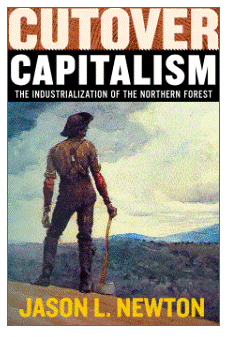
Back when resources started running scarce, the environment of the forest and bodies of workers became the natural resources from which mills and landowners extracted. Bodies and cutover landscapes were mobilized in new ways to increase the scale and efficiency of production—a brutal process for workers, human and animal alike. In the Northern Forest, an industrial working class formed in relation to the unique ways that workers’ bodies were used to produce value and in relation to the seasonal cycles of the forest environment.
Cutover Capitalism is an innovative historical study that combines methodological approaches from labor history, environmental history, and the new history of capitalism.

In a remote corner of the Arctic in 1941, a meteor shower flashed across the sky for an unusually long time. Taking this to be a sign, one of the local Inuit proclaimed himself Jesus Christ. Another proclaimed himself God. Anyone who didn’t believe in them was Satan. Violence ensued. At the End of the World isn’t just the remarkable story of a series of murders that occurred on the Belcher Islands, a group of wind-blasted rocks in Canada’s Hudson Bay. It’s also a starting place for a deeper cultural exploration.



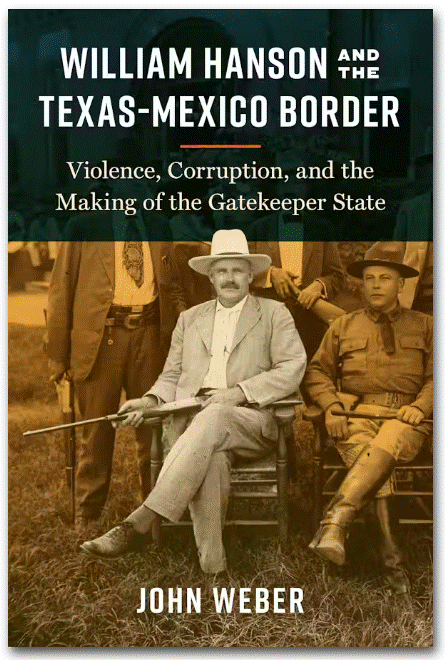
Hanson’s career illustrates the ways in which legal exclusion, white-supremacist violence, and official corruption overlapped and were essential building blocks of a growing state presence along the border in the early twentieth century. In this book, John Weber reveals Hanson’s cynical efforts to use state and federal power to proclaim the border region inherently dangerous and traces the origins of current nativist politics that seek to demonize the border population. In doing so, he provides insight into how a minor political appointee, motivated by his own ambitions, had lasting impacts on how the border was experienced by immigrants and seen by the nation.

The US government justified its World War II occupation of Alaska as a defense against Japan’s invasion of the Aleutian Islands, but it equally served to advance colonial expansion in relation to the geographically and culturally diverse Indigenous communities affected. Offering important Alaska Native experiences of this history, Holly Miowak Guise draws on a wealth of oral histories and interviews with Indigenous elders to explore the multidimensional relationship between Alaska Natives and the US military during the Pacific Wa



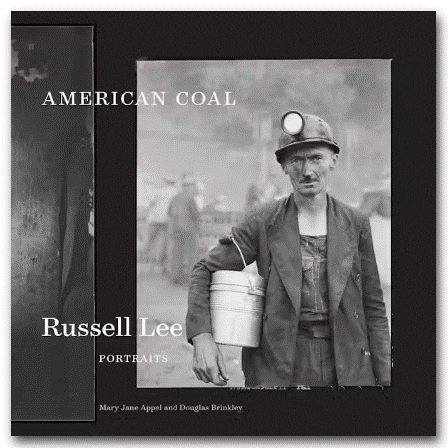
In 1946 the Truman administration made a promise to striking coal miners: as part of a deal to resume work, the government would sponsor a nationwide survey of health and labor conditions in mining camps. One instrumental member of the survey team was photographer Russell Lee. Lee had made his name during the Depression, when, alongside Dorothea Lange and Walker Evans, he used his camera to document agrarian life for the Farm Security Administration (FSA). Now he trained his lens on miners and their families to show their difficult circumstances despite their essential contributions to the nation’s first wave of postwar growth.




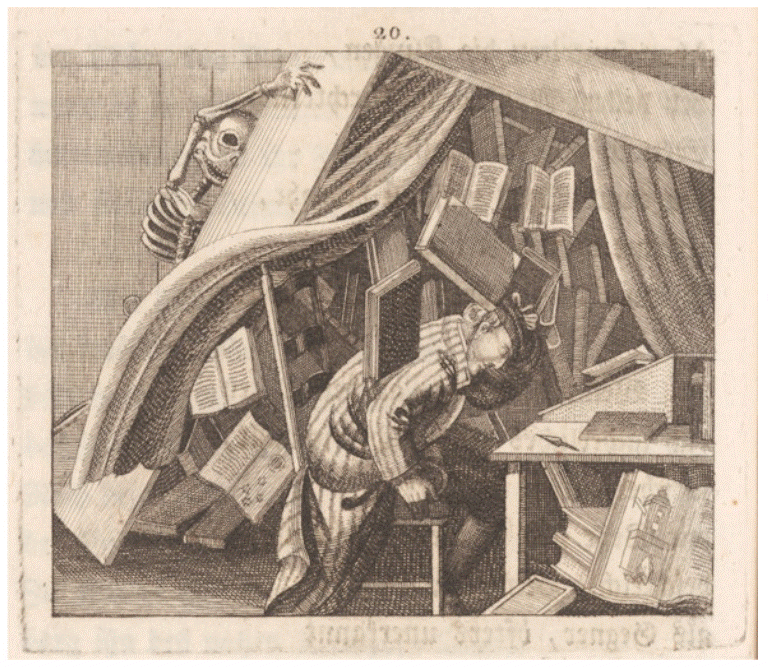
Johann Rudolf Schellenberg’s etchings of death as both a seductress and an enemy of scholars, from an 1803 edition of Johann Karl August Musäus’ Freund heins Erscheinungen in Holbeins Manier (Apparitions of death in the manner of Holbein)
