
Liberals in space: the 1960s politics of Star Trek
Among television programs of the late 1960s Star Trek was somewhat anomalous in tackling philosophical and political themes, and in doing so in a consistently liberal voice. Its statements, however, reveal not only the highest aspirations of the period’s liberal project, but also the limitations and unresolved tensions of that approach.
Promiscuous Intimacies: Rethinking the History of American Casual Sex

Casual sex has become a cultural commonplace since it was named in the 1960s and later became associated with the US college sex phenomenon of “hooking up”.
Victorian Women, Unwed Mothers and the London Foundling Hospital

The invention of the psychosocial: An introduction

Although the compound adjective ‘psychosocial’ was first used by academic psychologists in the 1890s, it was only in the interwar period that psychiatrists, psychologists and social workers began to develop detailed models of the psychosocial domain. These models marked a significant departure from earlier ideas of the relationship between society and human nature.
The History of the Fabian Society (1916)
Designating Dependency: The Socially Inadequate in the United States, 1910–1940
This article examines the use of “socially inadequate” as a label for the dependent poor in the United States, 1910–40. It analyses the dense meanings that were given to this term and the political significance that the label “socially inadequate” gained in relation to sterilization and immigration policy.
The Plight of Gay Visibility: Intolerance in San Francisco, 1970–1979

During the 1970s, San Francisco was often characterized as the “Gay Mecca” of the United States. While it’s true that San Francisco was more supportive of the gay community during this period, this depiction often dismisses the problematic side of the increasing visibility of homosexuals.
Between Class War on All Fronts and Anti-Political Autonomy: The Contested Place of Politics in the Working-Class Movements of Leipzig and Lyon during the Inter-War Years

Thumbnail

This article investigates the contested boundaries of the political within the working-class movements in Leipzig and Lyon at the end of the Weimar Republic and during the Popular Front. What the appropriate issues and places of politics should be was a question that was highly contested among the organisations of the local working-class movements in both cities.
Nomads of the Depression
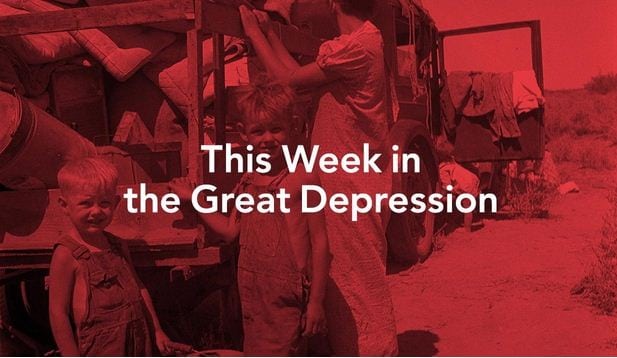 LoC Prints and Photographs Division | Bloomberg
This refugee family lost its home in 1932, joining the millions of Americans displaced by the Great Depression.
Not your average fraternal organization: the IBPOEW and labor activism, 1935–1950

In writing about working-class activism, scholars frequently study labor organizations and workplaces from which African Americans have been mostly excluded. Consequently, the uniqueness of black labor activism is not captured and is often misinterpreted. This article posits that black fraternal organizations, specifically the Improved, Benevolent and Protective Order of Elks of the World (IBPOEW), offer an alternative site for studying black workers and their struggles for employment during the 1930s and 1940s.
Oor Mad History: A Community History of the Lothian Mental Health Service Users Movement

This is a book of many voices, all of them telling an important story – the history of ‘the Lothian mental health users movement’ from the vantage point of the ‘users’. The speakers and authors stand in an important tradition – one dedicated to emancipation.
Transnational Psychiatries: Social and Cultural Histories of Psychiatry in Comparative Perspective c. 1800-2000

Thumbnail
The research programme sketched out in the introduction of Transnational Psychiatries is important and timely. Too often, the editors claim, histories of psychiatry (and histories of medicine in general) have limited their scope to specific national contexts, despite the fact that physicians have always built and maintained international networks through which information, theories, practices and technologies have been disseminated.
Hillbilly nationalists, urban race rebels and black power: community organizing in radical times
Americanism and anti-communism: the UAW and repressive liberalism before the red scare

The relationship between Communism and Americanism during the Popular Front period is now largely perceived as a positive one. By promoting the idea that Communism was an extension of specifically American political traditions, the argument runs, Communists were able to advance their participation in the unions and in a left-oriented cultural-political alliance with broad popular appeal. Against this perspective, this article . . .
The toxic oil syndrome as a catalyst to psychiatric reform in Spain (1981-85)
In 1981 Spain had an outbreak of a previously unknown disease. It became known as ‘toxic oil syndrome’ and it not only caused many deaths but also involved an alarming range of symptoms, with many patients suffering from mental problems, which left many of the victims disabled.
Archive for the history of psychology in Spain

Racial experiments in psychiatry’s provinces: Richard S Lyman and his colleagues in China and the American South, 1932-51
The worldwide expansion of psychiatry as a science at times followed pathways already laid by Christian medical missions to cultures seen as disadvantaged by sponsors. Interracial contacts were one outcome, and racial issues gained visibility in psychiatric inquiry and treatment.
‘Irresistible impulse’: historicizing a judicial innovation in Australian insanity jurisprudence

In twentieth-century Australian criminal law a distinctive departure from the M’Naghten Rules developed as a critique of the discourse of reasoning and verdicts applying in the relevant English trials from the 1880s.
Hebephrenia: a conceptual history

This paper traces the conceptual history of hebephrenia from the late nineteenth century until it became firmly embedded into modern psychiatric classification systems. During this examination of the origins and the historical context of hebephrenia it will be demonstrated how it became inextricably linked with twentieth-century notions of schizophrenia.
Colombian approaches to psychology in the 19th century

Colombian intellectuals of the 19th century widely consulted scientific psychology in regard to their political, religious, and educational interests. Colombian independence from Spain (1810) introduced the necessity of transforming the former subjects into illustrious citizens and members of a modern state.
Wilbur J. Cohen | Government Official, Educator, Social Welfare Expertt

Gender contracts in Estonian coastal farming families, 1870–1939

This paper deals with families that lived on the North West coast of Estonia from 1870 to 1939. This period involved a successive transition to a monetary economy for the family farmer and an increasing need for cash to be able to pay rents and debts arising from land purchases. A farm perspective is used to show the complexity of effects of societal changes on the gender division of labour.
Microcosms of Migration: Children and Early Medieval Population Movement
This paper discusses the participation of children in migration during the Viking Age. While the written evidence is limited, it, nonetheless, reveals the presence of children alongside the viking armies and their involvement in the acculturation process, especially older children.
Our 137 Year Commitment to the Safety and Well Being of Children
 New York Society for the Prevention of Cruelty to Children
Irish Catholic Identity in 1870s Otago, New Zealand

This article outlines the progress made by Bishop Patrick Moran (1823–1895) in standardising doctrinal practices of Irish Catholic immigrants in New Zealand in the 1870s.
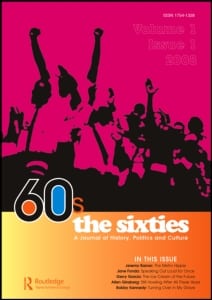
The other alliance: student protest in West Germany and the United States in the global Sixties
Building a just and secure world: popular front women’s struggle for peace and justice in Chicago during the 1960s
Emaciated, Exhausted, and Excited: The Bodies and Minds of the Irish in Late Nineteenth-Century Lancashire Asylums

Drawing on asylum admission records, casebooks, annual reports, and notebooks recording the settlement of Irish patients, this article examines a deeply traumatic and enduring aspect of the Irish migration experience, the confinement of large numbers of Irish migrants in the Lancashire asylum system in the late nineteenth century.
Little Albert: A neurologically impaired child

Evidence collected by Beck, Levinson, and Irons (2009) indicates that Albert B., the “lost” infant subject of John B. Watson and Rosalie Rayner’s (1920) famous conditioning study, was Douglas Merritte (1919–1925). Following the finding that Merritte died early with hydrocephalus, questions arose as to whether Douglas’s condition was congenital, rather than acquired in 1922, as cited on his death certificate.
Madness is civilization: when the diagnosis was social, 1948–1980
From Melancholia to Prozac: A History of Depression
Fifty years ago, the number of people diagnosed with depression was relatively modest. At present, by contrast, the Centers for Disease Control and Prevention estimates that no less than one in ten Americans suffer from this condition, or well over thirty million. What is responsible for such a far reaching transformation?
Mad doctors? The significance of medical practitioners admitted as patients to the first English county asylums up to 1890

This article analyses medical admissions to asylums via both case notes and other sources such as newspaper reports, revealing the responses of medical superintendents to their former colleagues and, in some cases, the judgements of practitioners on their institutional surroundings.
Swept up from the Streets or Nowhere Else to Go? The Journeys of Dutch Female Beggars and Vagrants to the Oegstgeest State Labor Institution in the Late Nineteenth Century

Most of them were relatively old women, single, and a quarter had children out of wedlock. Disease was prevalent, mortality was high and many of them had physical or psychological handicaps.
Madness is Civilisation: When the Diagnosis was Social, 1948-1980

Thumbnail
Michael Staub’s Madness is Civilization is about an era that ended just thirty years ago. Yet, the views it features seem as culturally distant from current psychiatric thought as do such topics as phrenology, neurasthenia or magnetism.
The Sciences of the Soul: The Early Modern Origins of Psychology
Thumbnail

Vidal’s ultimate goal in this ambitious, erudite and stimulating book is to overturn the myth that the discipline of psychology emerged in the nineteenth century by tracing its career within European intellectual history from the sixteenth to the eighteenth centuries.
Unemployed miners on street corner. Johnston City, Illinois (1939)
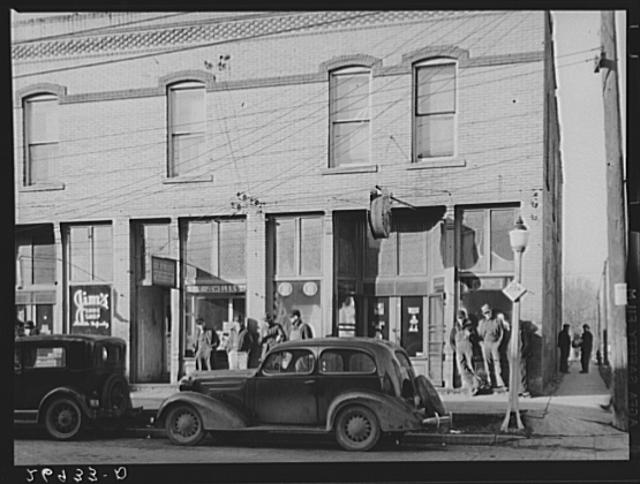 LoC | LC-USF34- 026933-D Arthur Rothstein
Tracing marriages; legal requirements and actual practice, 1700-1836 [podcast]

Everyday Struggles against Franco’s Authoritarian Legacy: Pedagogical Social Movements and Democracy in Spain

The most important foci of social resistance to the dictatorship were the workers’ organizations, the student and nationalist movements.
Youth cultures and the disciplining of Czechoslovak youth in the 1960s

The AIDS Pandemic in Historic Perspective
Potent antiretroviral drugs (ART) have changed the nature of AIDS, a once deadly disease, into a manageable illness and offer the promise of reducing the spread of HIV. But the pandemic continues to expand and cause significant morbidity and devastation to families and nations as ART cannot be distributed worldwide to all who need the drugs to treat their infections, prevent HIV transmission, or serve as prophylaxis.
“Neither guns nor bombs – neither the state nor God – will stop us from fighting for our children”: motherhood and protest in 1960s and 1970s America
This article looks at ideologies of motherhood within the welfare rights movement of the late 1960s and the anti-busing struggle of the early 1970s, primarily focusing on Boston.
Childersburg, Alabama. WPA (Works Progress Administration) day nursey for defense workers’ children (1942)
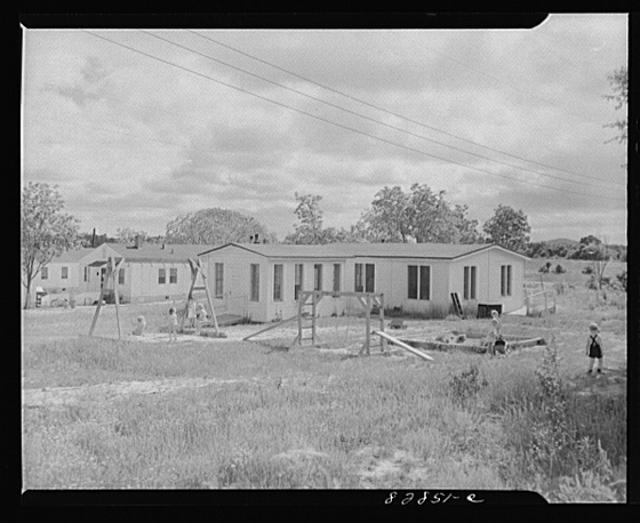 LoC | LC-USF34- 082851-C John Collier
Political authority and popular opinion: Czechoslovakia’s German population 1948–60
Social Welfare in Transition: Selected English Documents, 1834-1909
 Google
Roy Lubove (1966)
The narcotic drug problem
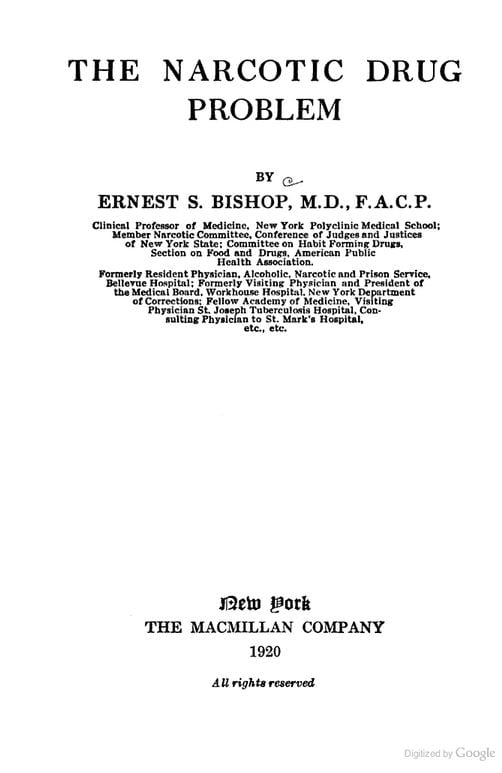 Ernest Simons Bishop (1920)
Diego Armus, The Ailing City: Health, Tuberculosis, and Culture in Buenos Aires, 1870-1950
Thumbnail
By focusing on a wide range of topics such as urban utopias, tango lyrics, literature, physical education, and female clothing, alongside the emergence of a culture of hygiene, Armus asserts, ‘my intent is to show how the disease deeply affected and was affected by multiple spheres of life in modern Buenos Aires’
The new WPA (Work Projects Administration) school in Franklin, Heard County, Georgia (1941)
 LoC | LC-USF34- 043887-D Jack Delano
Crossing sisters: patterns of protest in the journal of the Catholic Union of Slovak Women during the Second World War
Teaching about mental health and illness through the history of the DSM.

Most students enter introductory or abnormal psychology courses with a naively realist concept of what constitutes mental illness, and most textbooks do little to complicate this understanding. The tendency to reify the various diagnostic categories of the mental health disciplines into stable and independent illnesses is ever present.